
Vietnamese Table Tennis: The Ball That Leaves the Frame
Q: Bóng bàn Việt Nam đang gặp vấn đề gì trong cấu trúc thi đấu hiện đại? A: Vấn đề lớn nhất là tỉ lệ thắng điểm khi giao bóng thấp do giao bóng dễ đoán và thiếu chiến thuật ba nhịp bóng đầu (giao bóng – đỡ giao bóng – quả thứ ba), vốn quyết định 60-70% điểm số trong bóng bàn đỉnh cao hiện đại. Q: Vì sao bóng bàn là môn thể thao phù hợp để Việt Nam đầu tư? A: Đây là môn thể thao chi phí thấp, không đòi hỏi chiều cao hay tốc độ bẩm sinh hiếm có, mà cần sự khéo léo, tư duy chiến thuật và kiên trì — những phẩm chất Việt Nam có thể phát triển nếu xây dựng được hệ thống đào tạo dựa trên dữ liệu. Q: Bóng bàn nữ Việt Nam có cơ hội huy chương không? A: Có, vì trong bóng bàn, khác biệt thể chất giữa nam và nữ có thể được bù đắp bằng kỹ thuật và chiến thuật, và Việt Nam đã có những tay vợt nữ hàng đầu Đông Nam Á như Mai Hoàng Mỹ Trang; vấn đề nằm ở mức đầu tư và sự chú ý còn thấp.
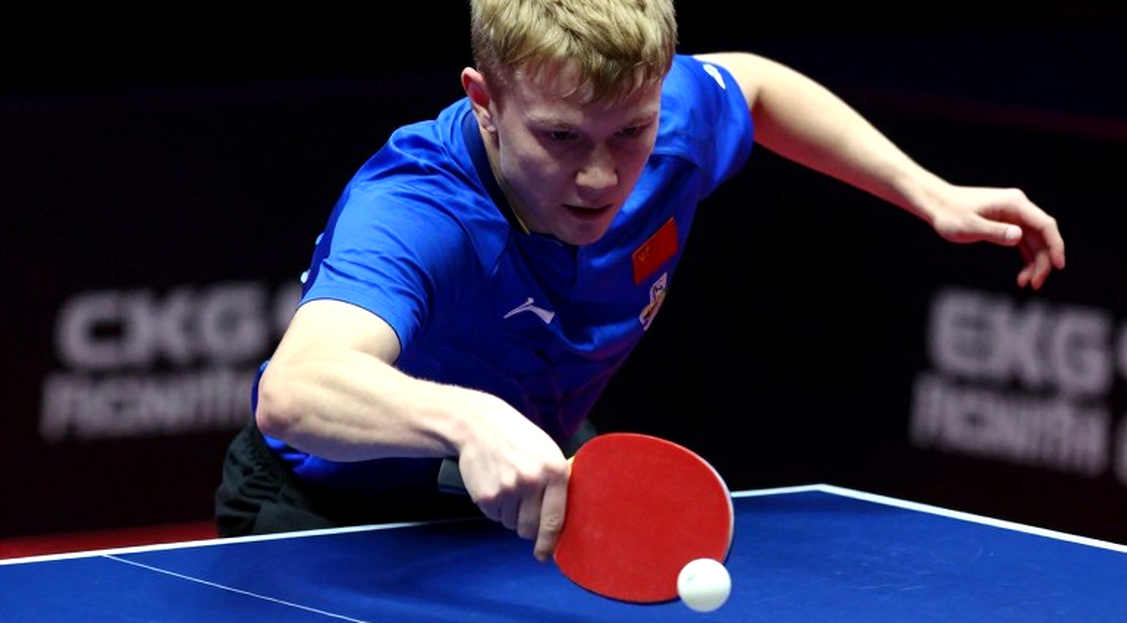
I was sitting in the seventh row of the press area, about twenty meters from the table, close enough to hear the ball clicking on the wooden surface more clearly than the applause from the stands. Fifth set, the score at 9-9. The Vietnamese player served. He tossed the ball high, snapped his wrist, sending it low and close to the net, with sidespin like a challenge. His Thai opponent blocked with the pimpled rubber, returning a floating ball. He stepped forward, looped with his forehand, and the ball tore through the air. 10-9. Then 10-10. Then 11-10 for the opponent. I sat there, notebook in hand, writing nothing. Because I understood something few outside the arena understand: this match was not decided in the fifth set. It was decided ten years earlier, in a provincial arena without air conditioning, where a boy practiced looping six hours a day without anyone correcting his technique. Vietnamese table tennis is the story of balls that leave the frame, that travel beyond the system's field of vision, before they ever enter the audience's.
I have followed Vietnamese and Southeast Asian table tennis for many years, from national championships held in aging arenas to SEA Games where athletes had to tape their own rackets. My job is to see the details the scoreboard never records. An abandoned grandstand still keeps its old applause. And I write about people at the margins of glory, because there the truth about a sport often shows itself most clearly. For me, Vietnamese table tennis is not a story of medals. It is the story of a system that forgot a sport lying in its own palm.
The first thing that must be said plainly: table tennis is not an expensive sport. A beginner's racket costs a few hundred thousand dong. A standard club table costs a few million. A 40+ plastic ball lasts several sessions. Compared with football, swimming, or athletics, the cost of nurturing a table tennis talent at the foundation stage is extremely low. Yet for decades, Vietnamese table tennis has remained in the grey zone of attention, mentioned once every two years when the SEA Games arrive, then forgotten. This is the core paradox: the cheapest sport is the most systemically starved.
Table tennis has a long history and a tightly organized international competition system. The International Table Tennis Federation (ITTF) runs a weekly-updated world ranking system, where every point of a player is directly tied to the matches they win and the events they enter. Since 2026, the ITTF has moved to the World Table Tennis (WTT) system with Grand Smash, Champions, Star Contender, and Contender tiers, creating a rich ladder for players of all levels. For Vietnamese table tennis, this system is both an opportunity and a mirror reflecting its backwardness. An opportunity because players can accumulate points at smaller events without facing the world's top players in the first round. A mirror because to join that system, you need professional logistics: a video analyst, a fitness coach, a sports psychologist, and a travel budget big enough to move across Asia and Europe. Without those, Vietnamese players can only glance at the flowers from horseback at events near home.
I remember 2026, when the football World Cup was held in Russia, I made a professional mistake I still consider my best lesson. I mispronounced a player's name three times in one commentary half. Colleagues laughed. But that shame taught me that ignorance is a starting point. I spent a month rewatching footage and built my own database. The habit of rewatching footage became a mandatory ritual. And when I applied it to table tennis, I realized something few discuss: Vietnam's problem is not fitness or spirit, but the structure of the game itself.
Let me start with a number most Vietnamese fans do not know. In a modern elite table tennis match, roughly 60 to 70 percent of points are decided within the first three beats of the ball: the serve, the receive, and the third ball. This is not my opinion, but a conclusion drawn from thousands of hours of video analysis by top training centers. In modern table tennis, the serve is no longer a formality to start a point, but a weapon of attack. The server holds the greatest advantage in the entire match, because they alone fully control the first ball. And in Vietnam, for decades, serve practice was treated as a side dish, something to do after exhausting the legs and arms.
I once sat through an entire training session at a youth center in Nha Trang to observe. Over four hours, the young athletes practiced forehand loops, backhand loops, lateral movement, multi-ball drills. Not one minute was dedicated to serving. I asked the coach. He laughed and said serving is easy, anyone can do it, practice it later. That answer describes the state of Vietnamese table tennis exactly.
Look at how the leading table tennis nations do it. In China, a child beginning the sport spends the entire first year learning only to serve and receive. They understand that in those three beats, the match is already decided. Ma Long, one of the greatest players in history, is known not for the most powerful loop, but for his ability to read opponents' serves and return the ball to positions no one expects. He does not win by power. He wins by information.
In Vietnam, we have a tradition of purely technical training. Players are taught beautiful, powerful, decisive strokes. But modern table tennis is not a contest of beautiful strokes. It is a game of space and time. A short, sidespin ball close to the net forces the opponent to step up and push it back, denying them the chance to generate power. That is the art of depriving the opponent of the right to attack from the very first second. And no drill in the Vietnamese table tennis curriculum teaches that as a science.
An interesting detail I drew from analyzing Vietnamese players' SEA Games matches: their point-win rate when serving is significantly lower than Thai and Singaporean opponents. Not because their basic serves are poor, but because their serves are predictable. They serve the same spin, the same placement, the same length, and they serve by reflex rather than tactic. Meanwhile, a Thai player in a single set may serve six different balls, constantly changing rhythm and placement, turning receiving into a nightmare.
Why does this matter so much? Because modern table tennis, with the larger 40+ plastic ball and weaker spin, has become a sport of precision and intellect, not of power. When the ball is bigger, it flies slower, spins less, and rallies last longer. That should favor Vietnamese players, who have good fitness and endurance movement. But it does not. Because in a long rally, what decides is not endurance, but the ability to make the right decision in a thousandth of a second, and the ability to change the ball's placement to break the opponent's rhythm.
I have spent years watching how Asian training centers operate. In Japan, each young player has a personal data file, recording every strength, weakness, repeated technical error, and even the psychological patterns when they fall behind. They do not train by feel. They train by data. In South Korea, national teams have dedicated video analysts whose job is to watch hundreds of hours of opponents' footage to find exploitable patterns. In China, regarded as the cradle of world table tennis, the selection process begins at age five, and every developmental stage is designed to optimize a specific ability.
In Vietnam, we still teach table tennis as a talent subject. Children come to the sport randomly, often because parents want them to exercise, or because a school has a club. There is no scientific selection system from primary school. There is no standardized training program built on international data. Each coach teaches by personal experience, by the style they were taught, by what they believe is right. That creates a diverse but inconsistent table tennis scene, where talents who slip through by chance do not receive proper guidance at the most important stage of their careers.
I recall a story of a young female player I had the chance to follow. She was born in a central province where table tennis barely existed as an organized sport. She came to it through a physical education teacher in middle school who happened to have an old racket and a passion. For three years, she trained on a worn table in the school's multipurpose hall, under yellow fluorescent lights. She looped with an odd technique, unlike anyone else, because no one had taught her the correct way. But she had something not every talent has: the ability to read the ball. She could anticipate an opponent's direction before they struck. That is an innate gift, something data cannot create and coaching cannot teach.
When she entered the national youth team, her odd technique became a problem. Coaches wanted to fix it. They wanted her to play to a standard template. But in that repair process, they inadvertently erased her most precious asset: her difference. And difference, in modern table tennis, is the most valuable asset. The greatest players in the world all have something that cannot be copied. Ma Long has the ability to handle the ball at a speed others cannot match. Fan Zhendong has a backhand loop no one can block. Sun Yingsha has a calm that turns chilling in decisive points. These are not things created from templates. They are things nurtured from personality.
And here is the most ironic thing about Vietnamese table tennis: we have personality, but no system to nurture it. We have talent, but no path to develop it. We have beautiful stories, but no way to turn them into medals sustainably. Every success of Vietnamese table tennis is a small miracle, not the result of a process.
Look at how a Vietnamese player prepares for a match. They have no video analyst for the opponent. They have no one reading the opponent's serve data to devise a specific tactic. They rely on feel, on what they saw in a few viewings, on the coach's advice. Meanwhile, their opponents in more developed countries have an entire team behind them. That is the unfairness of the system, but also a missed opportunity: if we built a professional process even at a basic level, we could significantly close the gap.
I believe that because I have seen it happen in other sports. Table tennis is not a sport requiring enormous investment like football. It requires intelligence in organization, patience in building foundations, and respect for the smallest details. A data analyst for the national table tennis team does not need an exorbitant salary. A player profile management system does not need expensive software. What is needed is a long-term commitment, a vision beyond one SEA Games, and someone patient enough to pursue it.
There is a concept in table tennis that Vietnamese players seldom use: "playing space". It describes the space a player can control in a rally, horizontally, vertically, and in time. A strong player not only strikes well, but creates space for themselves and deprives the opponent of it. When a Vietnamese player steps to the table, their space is usually smaller than the opponent's, not because they are slower, but because they react later. They have no plan for the next point. They play on instinct. In modern table tennis, instinct is not enough to win. You need instinct plus a brain programmed with data.
What I want to stress here is not that we lack talent. We have talent. I have seen them, children practicing in under-resourced arenas, young players accepting low pay to chase a dream no one guarantees. I have seen their endurance, their sacrifice, and their tears when they lose a match they gave everything for. What we lack is a system smart enough to turn those tears into points.
And there is a blind spot in how we view Vietnamese table tennis: we measure success by medals, not by progress. A bronze at the SEA Games can hide the reality that we are falling behind on every important metric. Meanwhile, a defeat at a continental event can be a sign of progress, if that player performed better than a year before. We need to learn to measure progress, not just results.
I want to tell of an evening in 2026, when stadiums closed and the world paused. I was in an emotional crisis, like many others. There were no sports events to report, only silence. I turned to athletes training alone. A hurdler built a wooden frame on his rooftop to practice technique. A swimmer trained in a small unheated pool. I wrote a series called "Solitary Running Marks", recording each morning's training through video calls. The series won an award. But what I learned from it was not the prize. It was the understanding that an athlete's solitude mirrors the solitude of people in my profession, those who stand behind and record. In 2026, I ran alone and understood why athletes fear the night.
In table tennis, there is a similar solitude. Each player stands alone on the court, with no teammate to pass to, no one to blame. Only them, the racket, and the ball. And in Vietnam, that solitude is greater, because behind them there is no system, only a few people working quietly, a few dedicated but under-resourced coaches, and a few fans watching on low-quality livestreams. It is a forgotten solitude, not a celebrated one.
So where is the way out? I do not believe in macro solutions like "we need a national strategy for table tennis". Such phrases are usually meant to be spoken, not done. I believe in small, concrete, measurable solutions. Start by building a national database of table tennis players, recording every technical metric from childhood. Teach every coach to use video for analysis. Send a few young coaches to Asian training centers to learn methods, and require them to share back. Create a national tournament with a clear points system, so players are motivated to compete year-round, not just train for one SEA Games. These things do not need millions of dollars. They need determination and a little science.
Of course, there is a paradox: table tennis is not a beloved sport in Vietnam. It does not have the mass audience of football. It has no national stars. But that is precisely why we should invest in it. Because table tennis is a sport where Vietnam can compete at a higher level, if we know how. It does not demand height, innate speed, or rare physical traits. It demands dexterity, intelligence, and perseverance, qualities Vietnamese people are said to have in abundance. If we cannot compete in a sport as cheap, popular, and physically suitable as table tennis, the question is not about players' ability, but about our organizational capacity.
I once spoke with a Japanese coach who had spent years working with Southeast Asian teams. He told me something I still remember: "In Vietnam, you have players who can play better than your system allows them to." That is a compliment and an accusation. It says talent is being wasted, not because players are weak, but because the system is not strong enough to lift them.
There is another aspect worth discussing: women's table tennis. For years, Vietnamese women's table tennis has achieved notable regional results, with players like Mai Hoang My Trang, regarded as one of Southeast Asia's top female players over the past decade. But their achievements are often less mentioned, less funded. There is an asymmetry in how we view women's sports, not just in table tennis. A female athlete achieving the equivalent of a male athlete often receives less attention and fewer resources. And in a sport like table tennis, where the physical difference between men and women can be offset by technique and tactics, investing in women's table tennis can yield higher returns. We are overlooking an opportunity that could pay off in medals.
Look at China. Their women's table tennis team dominates the world not only because they have many talented female players, but because they invest in women's table tennis as seriously as men's. Sun Yingsha, Chen Meng, Wang Manyu, those names are treated as true sports stars, with sponsorship deals, professional preparation, a full support system. In Vietnam, we have talent, but we do not give them enough conditions to become stars.
There is a question I often ask myself: do we really want Vietnamese table tennis to go far? Because if we truly want it, we would not need to wait for a miracle. We would invest. We would plan. We would build. The question is not whether we can, but whether we want to.
I return to the SEA Games match where I began this article. The Vietnamese player lost the fifth set. He bowed his head, greeted his opponent, packed his racket. The stands applauded politely, then fell silent. The next day, a newspaper reported the defeat in a single line. Two days later, the story vanished from the papers. And life went on. But I know that somewhere, in a provincial arena without air conditioning, a boy is still practicing loops six hours a day, hoping that one day he will stand on the region's biggest court. The question is whether we will build that boy a path, or whether he will become another forgotten medal story on some May night.
I do not write this to complain. I write to record. Because a sport cannot progress if its problems are not put on the table. And though I believe change is possible, I also know it will not come from an article, a conference, or a promise. It will come from thousands of small decisions, from people who dare to do what no one sees. A few of them I know. They are not famous. They do not earn much. But they are the ones truly keeping this sport alive.
I once wrote about an endurance girl before I understood what endurance was. She finished seventh at a national championship, unnoticed. I wrote about her as I would write about an ordinary person doing an extraordinary thing. And in Vietnamese table tennis, there are many such "endurance girls", people running a race with no finish line. They do not need pity. They need a path. They need a system. They need a chance to compete fairly.
Modern table tennis has become a game of data, tactics, and decisions calculated in every hundredth of a second. Meanwhile, Vietnamese table tennis still plays by feel. That is not the players' fault. It is our fault, those who did not build them a solid enough foundation. And if we do not change, we will continue to have flashes, unexpected medals, accidental victories. But we will not have a truly real table tennis scene. We will only have lone stars in a sky devoid of a system.
I want to close with a progressive thought, not a summary. It is this: every practice of a child in a provincial town, every technical difference dismissed as an "error", every player forgotten in a data-poor system, is an opportunity we have let slip. But opportunity is never truly lost. It only waits for someone patient enough to pick it up. Vietnamese table tennis does not need a miracle. It needs someone patient enough to build a path, and a community wise enough to follow it. Behind the net, somewhere, a ball is still bouncing. The question is not how long it will bounce, but whether we have the courage to bring it out of the frame.


Cầu thủ liên quan