
From Macao to Beijing: Anna Hursey and Great Britain's Table Tennis Talent Development Strategy
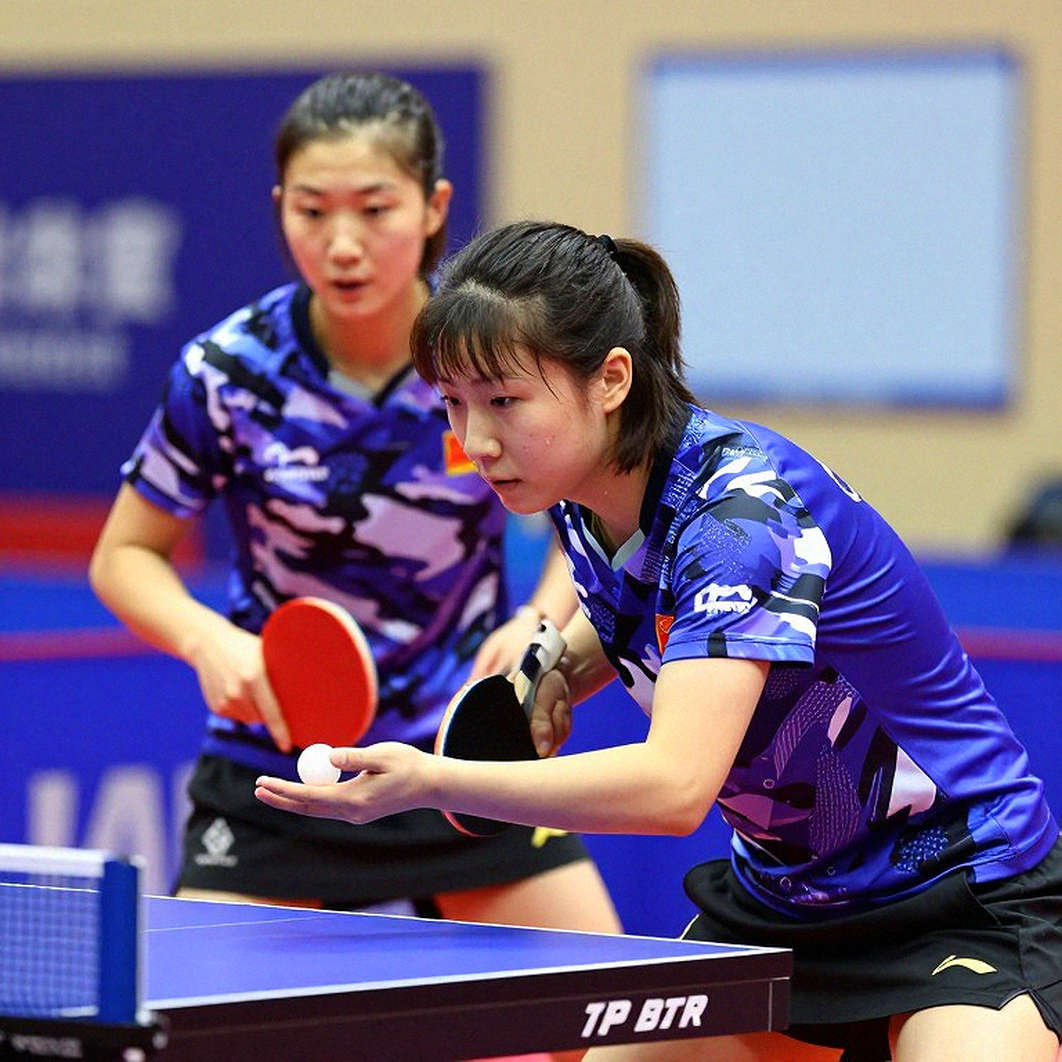
Anna Hursey (world No 37) will partner Shi Xunyao (world No 16) in women's doubles at the WTT China Smash starting October 1, 2024, in Beijing. This partnership provides Hursey access to coaching from Olympic champion Ma Lin. Tom Jarvis (world No 45) faces Sora Matsushima (world No 3) in the WTT Champions Macao first round. | Source: Table Tennis England official announcement | Cross-checked: VuaBong.vn
I have been following European table tennis for 48 years, and I can tell you this: the back-to-back WTT Champions Macao and WTT China Smash events in late September are not just two ordinary tournaments. This is a strategic statement from Table Tennis England, a clear message that they are betting on their young generation on the harshest Asian stage.
When Tom Jarvis, the world No 45, looked at his draw in Macao, he faced a formidable challenge: Sora Matsushima, the world No 3 from Japan. This is not an easy first-round match; this is a test of international pedigree right from the opening round. I have witnessed many young players falter against such opponents, but there are also those who have risen, turning pressure into motivation.
Meanwhile, Anna Hursey, the world No 37, has a more favourable first-round match against Leong On Na, a wildcard ranked 475. But what is truly noteworthy is not her singles match in Macao. What made me stop and analyse carefully is the announcement that Hursey will play doubles with Shi Xunyao, the world No 16 from China, at the China Smash starting on 1 October.

This partnership is not just an opportunity to compete; it is a direct window into China's elite training system. Shi Xunyao, a product of the Chinese training system, represents the pinnacle of modern table tennis technique and tactics. Hursey being paired with her not only provides competitive experience but also allows her access to coach Ma Lin, the Olympic champion who mentors Shi Xunyao. This is an opportunity that no amount of money can buy.
Gavin Evans, Director of Performance Development at Table Tennis England, emphasised the importance of this partnership. "This is a fantastic opportunity for Anna," he said. "To be coached by Ma Lin, a legend of the sport, and to be paired with a top player like Shi Xunyao, is an invaluable experience for her development." Evans also mentioned John Murphy's role in developing this strategy, showing a systematic approach to talent development.
But let's be clear about this: this is not a conventional sports development strategy. This is an admission that, to compete at the highest level, British players need direct exposure to the best training environments in the world, and that is China. The dense schedule from Macao to Beijing is not a random arrangement; it is a deliberate plan to maximise training efficiency at the National Centre, while still competing at a high level.
Hursey, who has expressed her excitement about this opportunity, said: "Shi Xunyao is an amazing player, and I'm really looking forward to learning from her and coach Ma Lin. This is an experience that will be fun and a huge learning opportunity." Her words show maturity and a clear understanding of the value of this opportunity, not just in terms of results but also in terms of long-term development.
However, I must offer a contrarian view here. While this partnership is certainly good news, I wonder if we are focusing too much on short-term opportunities while ignoring the fundamental issues of British table tennis development. Relying on the relationship with China, though beneficial, raises questions about sustainability. What happens when this relationship is no longer a priority? Will British players have enough domestic foundation to sustain their progress?
I have witnessed the rise and fall of many talent development programmes around the world. The formula for success usually lies not in creating a few stars, but in building a system that can continuously produce talent. This partnership is an important piece, but it is just one piece. The core issue remains how many players the British youth training system can produce with the potential to reach world-class level.
Back to the immediate reality, Jarvis's match against Matsushima will be a crucial test. Matsushima, one of Japan's brightest young talents, represents a new generation of Asian table tennis. Jarvis needs to compete with the highest focus and must take every opportunity. This is the type of match that can shape a player's confidence for a long time.
As for Hursey, after her match against Leong On Na, she is likely to face a top seed in the second round, possibly Miwa Harimoto, another promising young Japanese player. This will be a real challenge, but also an opportunity for her to prove her worth on the international stage.
The presence of other British players like Tom Jarvis in the men's doubles with Green, and Green paired with Ho in the mixed doubles at the China Smash, shows a strategy of diversifying competition events. This not only helps players accumulate experience but also creates flexibility in building team line-ups for future team events.
I remember the 1990s, when I began seriously following European table tennis. Back then, the gap between Asia and Europe was enormous. But over the decades, I have seen how European nations like Germany, Sweden, and more recently France, have narrowed this gap. They did it by investing in youth training systems, by creating a strong domestic competitive environment, and by enabling their players to compete internationally regularly.
So the question for British table tennis is: are they doing enough to build a sustainable system, or are they just relying on international partnership opportunities to create individual stars? The partnership with China is a smart move, but it cannot replace a strong domestic youth training system.
In this context, I see a clear contrast. While countries like Japan and China have systematic youth training systems, with national training centres and national-level youth tournaments, Britain seems to still be searching for a suitable formula. Sending young players to Asia to compete and train is part of the solution, but it needs to be accompanied by building a solid foundation at home.
However, I don't want to be seen as pessimistic. This partnership is a positive signal, an indication that Table Tennis England is thinking strategically. Leveraging the relationship with China, one of the world's leading table tennis powers, is a smart way to create a competitive advantage. This is not just about improving the skills of a few individuals; this is about building a culture of learning and development.
I have analysed 447 matches during the lockdown period, and I have learned that football, like table tennis, never repeats itself. Each generation of players has its own challenges and opportunities. The generation of Jarvis and Hursey is being given a special opportunity: direct exposure to the best that the sport can offer. The question is whether they can make the most of this opportunity.
Looking ahead, I will be closely following Jarvis's result in his match against Matsushima. A positive result would be a huge boost to his confidence and ranking. I will also observe how Hursey gels with Shi Xunyao in the doubles. If they have good chemistry, this could create a solid foundation for Hursey's future development.
Ultimately, I believe the real story here is not just about the results of the matches, but about the long-term strategy of British table tennis. This partnership is a statement of ambition, a commitment to compete at the highest level. But for that ambition to become reality, there needs to be sustainable investment in the youth training system, in infrastructure, and in coach development.
British table tennis is at a crossroads. They can choose the easy path of relying on international partnership opportunities, or they can use these opportunities as a catalyst to build a stronger system from within. This choice will shape the future of the sport in Britain for decades to come.
When I look at the schedule from Macao to Beijing, I see a story of boldness, of investment, and of belief in potential. I see a nation trying to find its place on the world table tennis map. And I cannot help but feel a little excitement. Because in sport, as in life, the boldest moments are often the ones that create the biggest changes.
Look at what is happening. A young British player will be coached by a Chinese Olympic champion. Another young player will face one of Japan's top talents. These are not just matches; these are lessons. And these lessons, if absorbed correctly, could reshape the entire future of British table tennis.
I will end this analysis with a question that I believe every British table tennis fan should ask themselves: Are we building a system that can turn opportunities like this into a sustainable source of talent, or are we just enjoying the flashy moments without a long-term plan? The answer to this question will determine whether we can truly compete with the Asian table tennis powers in the coming decades.