
Nguyen Tien Minh at 43 overcomes Vietnam Open 2026 qualifiers: A victory of experience or the absence of singles expertise?
{"core_answer":"Nguyễn Tiến Minh, 43 tuổi, vượt qua vòng loại Vietnam Open 2026 (Super 100) nhờ khai thác điểm yếu chuyên môn đơn của đối thủ trẻ Nguyễn Hoàng Thái Sơn. Anh gặp Zhe Ying Ye (Đài Loan) ở vòng chính.","key_facts":["Giải Vietnam Open 2026 diễn ra từ 8 đến 13 tháng 9 với hơn 300 vận động viên từ 27 quốc gia.","Lê Đức Phát phải tiêm giảm đau vì chấn thương đầu gối và gót chân.","Nguyễn Tiến Minh hiện xếp hạng 254 thế giới.","Nguyễn Hải Đăng và các tay vợt đơn nam khác đã dừng bước."],"source":"Tổng hợp từ phát biểu của VĐV và dữ liệu BWF","date":"September 2026","related_questions":[{"q":"Nguyễn Tiến Minh có thể đi sâu tại Vietnam Open 2026?","a":"Anh sẽ gặp Zhe Ying Ye ở vòng chính, đối thủ được đánh giá cao hơn về thứ hạng và thể lực."},{"q":"Chấn thương của Lê Đức Phát ảnh hưởng thế nào đến đội tuyển?","a":"Rủi ro tái phát cao khi phải tiêm giảm đau thường xuyên, đe dọa cơ hội thi đấu ở các giải quốc tế sau đó."}]}
Amid the rapid breath inside Nguyen Du stadium, an image caught my attention. Nguyen Tien Minh, 43 years old, stood there, drenched in sweat but with a gaze maintaining absolute focus. In front of him stood Nguyen Hoang Thai Son, a player nearly two decades younger. When the final drop shot touched the court, Minh raised his hand to the sky in the quietness of victory that not everyone understood the true value of. I look at the data screen from my computer monitor, and realize that this was not just a match. It was a statement of existence.
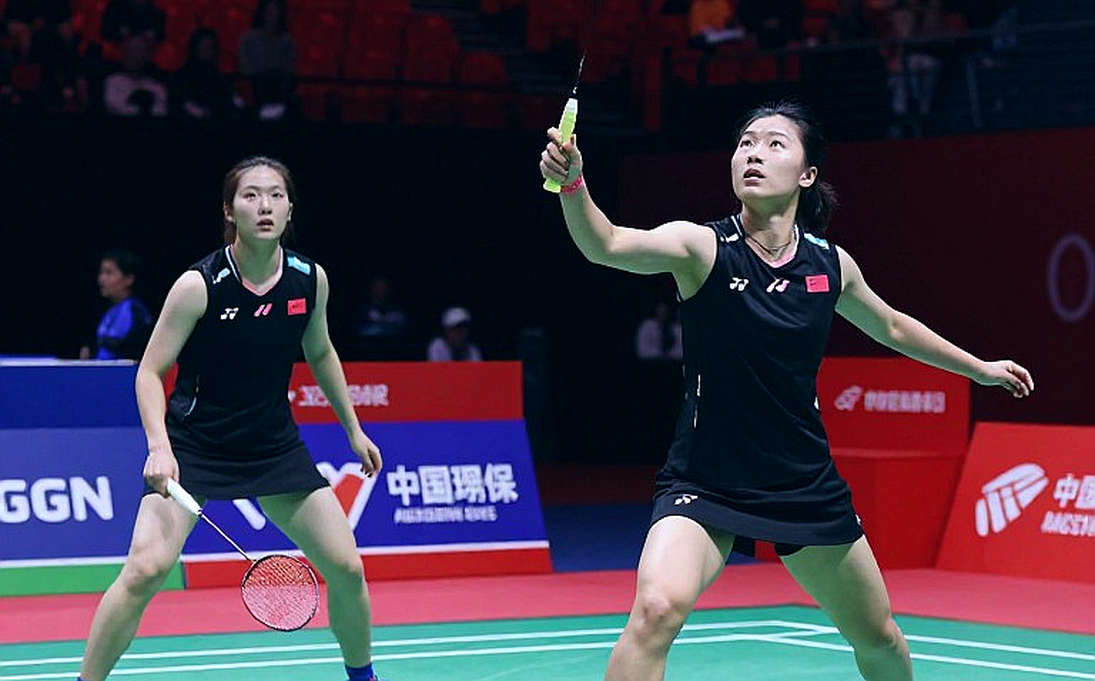
The context of this match matters more than people realize. The 2026 Vietnam Open, an event classified as Super 100 level by the Badminton World Federation, isn't an event with high ranking points. But for Vietnamese players, this is an important stop in their race to accumulate points. Before I could ask about tactics, Nguyen Tien Minh gave a brief assessment: 'The opponent is not strong in singles, mainly relying on strength and speed.' He said it plainly, without any embellishment. His own words revealed the entire decoding structure for me.
As someone who has followed badminton for years, I can affirm that Nguyen Tien Minh's victory didn't come from any superior tactical maneuver. It came from exploiting a fundamental weakness: the opponent's lack of singles specialization. Nguyen Hoang Thai Son, better known as a doubles player, carried the movement habits and stroke technique of a doubles specialist onto a singles court. In singles badminton, space management and movement rhythm decide everything. A doubles player tends to control laterally, while singles demands vertical rotation. Nguyen Tien Minh's opportunity was clear: when opponents move side-to-side to react to deep longitudinal shots, their body position breaks down and the rally structure collapses.
The health situation of other Vietnamese players is a deeper concern. Le Duc Phat, one of the national team's hopes, is still battling knee and heel injuries. He needed pain-relief injections just to compete. His wife sat in the stands, her eyes never leaving her husband's every step. For me, that moment wasn't just about an athlete fighting through pain. It was about a sports medicine system still seeking the balance between letting athletes compete and protecting their careers long-term. 'Every torn muscle fiber leaves a mark on a player's journey,' I once wrote. And here, Le Duc Phat's mark is an unresolved pain.
However, what bothered me most about this qualifying match wasn't the victory itself, but how we choose to define it. This tournament features over 300 athletes from 27 countries and territories, yet the most notable name in Nguyen Tien Minh's path is Zhe Ying Ye (Taiwan) in the main draw. The emergence of young players like Nguyen Hoang Thai Son from doubles discipline suggests that Vietnamese men's singles badminton is in a phase of rediscovery. But what happens if a veteran's qualifying-round victory gets mistaken as proof that our foundation is still intact? The uncomfortable truth I see through my data lens is this: a victory over a doubles specialist shouldn't be celebrated as a milestone; it should be recognized as a signal that forces us to stay honest about our squad depth.
The rush to celebrate Nguyen Tien Minh's victory is masking a systemic issue. While other nations bring young players with great tactical depth, Vietnam still relies on a 43-year-old legend and an injured player needing injections. 'Amid the cheers of the stands, there are sighs the audience never hears.' And I heard those sighs clearly when I looked at the entry list for Vietnamese players in this tournament. Nguyen Hai Dang has exited, Le Duc Phat is fighting through pain, and the next generation is still far from international standard.

Conversely, a positive signal comes from Nguyen Thuy Linh in the women's singles as she prepares to face 19-year-old Xu Wen Jing from China. In my memory, seeing a young Vietnamese female player reach a Super 100 main draw represents a significant milestone. However, we need to be realistic about the value of these performances. After all, a young player's true worth lies in their capacity to learn and absorb experience through each match. I remember watching Nguyen Tien Minh when he was the same age as some young coaches now, and I realized a different truth. He is enjoying badminton, doing what he loves. That is a privilege, but also a lonely reality.

That loneliness shaped how I view this qualifying match. From a historical perspective, Nguyen Tien Minh's presence at this age is a rare exception. But from a developmental perspective, our reliance on an exception is becoming a tactical blind spot. Without a concrete generational handover plan, our belief in Minh's 'victory symbol' might inadvertently delay the growth of the next generation. What I care about most is the future of Vietnamese badminton after Nguyen Tien Minh finally walks away.
As I left the stadium, the scoreboard still displayed Minh's victory. Young reporters were surrounding him. An air of excitement filled the venue. But I couldn't stop thinking about something else: a misdiagnosis can silently derail an entire career. Conversely, a correctly diagnosed victory can open a new path. Nguyen Tien Minh did the right thing for himself. But the biggest question isn't whether he can get past Zhe Ying Ye in the next round. The biggest question is: who will take his place? And if no one is ready, what exactly are we celebrating?