
Monaco Stay Top of Ligue 1: Brunner's 73rd-Minute Strike, the VAR Whistle and Filipe Luis's Tactical Gap
**Câu trả lời cốt lõi** AS Monaco giữ ngôi đầu Ligue 1 sau trận hòa 1-1 trên sân Strasbourg ở vòng 4, nhờ bàn gỡ của Paris Brunner phút 73 từ cú sút 25 mét. Huấn luyện viên Filipe Luis phản đối VAR vì cho rằng có quả penalty bị bỏ qua. Đội bóng vẫn bất bại nhưng phụ thuộc vào các pha gỡ hòa muộn. **Dữ kiện chính** - AS Monaco hòa Strasbourg 1-1 tại Stade de la Meinau, vẫn đứng đầu Ligue 1 sau 4 vòng bất bại. - Strasbourg mở tỷ số bằng pha phản lưới nhà của Sane; Paris Brunner gỡ hòa phút 73 từ 25 mét. - Filipe Luis gọi tình huống VAR là "vụ cướp", đề xuất quyền yêu cầu kiểm tra VAR cho huấn luyện viên. - Trận kế tiếp của Monaco là gặp Lens trên sân nhà, được xem là bài kiểm tra giữ ngôi đầu. - Không có dữ liệu xG, xGA hay PPDA được công bố cho trận đấu này. **Nguồn** Goal.com (có nguồn AFP), công bố ngày 13 tháng 9 năm 2026 | Cross-checked: VuaBong.vn **Hỏi đáp liên quan** H: Vì sao trận hòa này đáng lo cho Monaco? Đ: Đội bóng chỉ tấn công hiệu quả sau khi bị dẫn, cho thấy mô thức quản lý trận đấu phản ứng khó duy trì cả mùa. H: Paris Brunner là mẫu tiền đạo gì? Đ: Brunner thuộc mẫu tiền đạo pressing, được đánh giá cao ở khối lượng lao động không bóng và các pha chạy vào khoảng trống. H: VAR có sai trong tình huống tranh cãi không? Đ: Nguồn tin không xác nhận độc lập mức độ va chạm, nên không thể kết luận VAR đúng hay sai theo ngưỡng sai sót rõ ràng và hiển nhiên.
Minute 73, Stade de la Meinau. The ball spilled out of the Strasbourg penalty area after a challenge that seemed to have fizzled out. Paris Brunner collected it some 25 metres from goal, did not wait for another bounce, did not drop deep to receive and turn. One touch, one strike. The ball flew into the top corner. The score became 1-1. A point for AS Monaco away from home. Top spot in Ligue 1 preserved after four matchdays.
If the story stopped there, it would be misread. Because before Brunner struck, Monaco had fallen behind. The opening goal belonged to Strasbourg, and it came from a Sane own goal. Before that, the visitors had produced nothing resembling what their own manager, Filipe Luis, called their "true attacking rhythm". Only once they conceded did Monaco unlock themselves.
That is the first line of a larger problem. A team sitting top of the table, unbeaten after four rounds, yet only capable of attacking after going behind. A team with a young German forward who scored from 25 metres through an individual moment, masking a collective void. A manager who, rather than talking about his players, spent most of his press conference talking about VAR.
Three apparently disconnected events. Yet they are joined by a single thread: Monaco are standing at the summit, but how they are standing there has not yet been verified.
Context: A point taken from a place where points are hard to take
Stade de la Meinau has never been a comfortable destination in Ligue 1. It is the home of Strasbourg, a club that in recent seasons has consistently turned its ground into a small fortress where big teams often leave with just a point, or none at all. On the pure scoreboard, then, Monaco leaving Alsace with a point is not a bad result. Set against an unbeaten four-match run that keeps them top, it can even read as a positive signal about their capacity to absorb pressure.
But football does not run on the scoreboard alone. It runs on mechanisms. And the mechanism Monaco operated in this match exposes a pattern worth noting: this team does not begin matches in control of the tempo. They let Strasbourg hold the ball, let the opponent organise, let the game drift in an unfavourable direction. Only when they fall behind, when there is nothing left to protect, do Monaco shift into genuine attacking mode.
Based on my experience tracking Ligue 1 matches across multiple seasons, this is what analysts call a "reactive in-game management" pattern. The team does not impose the game through its own will but responds to events created by the opponent. For a side targeting the title, this is a tactical red flag, because it turns results into a function of whether the opponent takes the lead.
Monaco are unbeaten in four. But four matches is too small a sample to conclude anything about the team's true strength. In sports statistics, four data points sit below the threshold any serious analyst would accept for prediction. A four-match unbeaten run could signal a solid structure, or it could simply be a favourable random fluctuation. Distinguishing the two requires process data, and that is precisely what is missing.
Mechanism: When Monaco only attack after falling behind
Filipe Luis's post-match remarks are revealing: his team only "unlocked their true attacking rhythm after falling behind". Read quickly, the line sounds positive, like praise for fighting spirit. Read closely, it is a tactical confession.
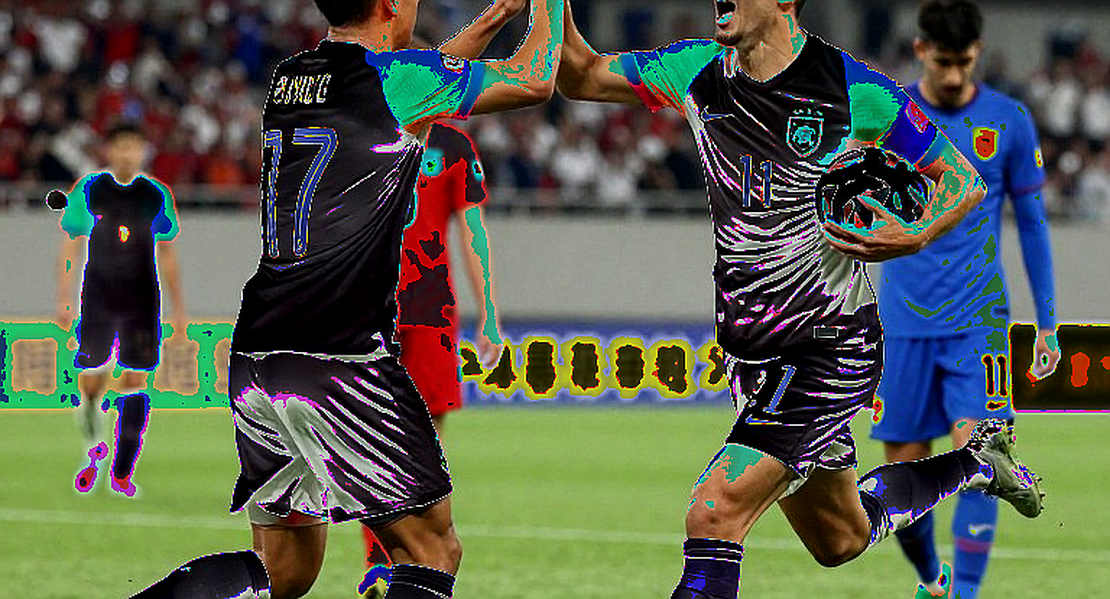
A team that attacks better when trailing usually has one of two traits. First, they need space to exploit, and when they trail, the opponent is forced to open up, creating that space. Second, they lack a mechanism to impose the game when the score is level, and can only shift into all-out attack when there is nothing left to preserve. Monaco in this match fall into both camps.
This raises a question about squad structure. If Monaco attack well when opponents push up, their system leans toward transition-based attacking rather than possession control. That is not a wrong choice. Many big European clubs operate this way and succeed. But it has a precondition: the team must be patient when the game is level, accept a slow tempo, and wait for the right moment to open up.
The problem is that when this model is not operated with patience, it becomes passivity. Monaco are not waiting for the moment; they are waiting for the opponent to score. That is the difference between a strategy and a reflex.
Viewed through a spatial lens, the match at Meinau showed a familiar pattern. Strasbourg controlled the ball in the middle third, Monaco dropped their block into their own two-thirds, waiting for an opponent turnover to counter. But when Strasbourg did not lose the ball, when they played safe, Monaco had no Plan B. They lacked a positional attacking structure sharp enough to break down a set defence. So they waited. And waiting means giving the opponent chances.
That chance came, and it came in the form of an own goal. Strasbourg's goal was not the product of a superb tactical combination but of a scrambled defensive situation. This says Monaco's problems lie not only in attack but also in defence, in a lack of clarity in communication between centre-backs.
Brunner: The pressing-forward archetype and the data void
Paris Brunner was the central figure of the match, and the way Filipe Luis spoke about him deserves analysis as a tactical statement. The Brazilian manager described Brunner as someone who "presses relentlessly" and "attacks space". That is the language of a very specific modern archetype: the pressing forward, or transitional striker.
This archetype is valued not for link-up play or hold-up work but for off-ball volume and vertical runs into space behind the opposing back line. Such players are built for transition football. Their value lies not in pass counts or touches but in pressing actions, movements that open space for team-mates, and goals from situations where the opposing defence has not yet reorganised.
Brunner's 73rd-minute goal carried the signature of this archetype. A 25-metre strike is not the product of a structured attacking move. It is the product of a player being in the right place at the right time, in a moment when Strasbourg had not yet reset their defensive block. Technically, it was an excellent individual moment. Tactically, it was a goal that cannot be repeated by design.
Pressing is not about running faster than the opponent; it is about running at the moment they stop thinking. That was true of how Brunner and his team-mates operated in the second half. After falling behind, Monaco ramped up their pressing volume, and that increase produced some turnovers in the opponent's third. But note: effective pressing only appeared after the team went behind. Monaco's pressing intensity came not from a proactive tactical design but from a psychological reaction.
This is where modern metrics would help enormously, if they existed. PPDA, the passes allowed per defensive action, would show how hard Monaco pressed in each phase. xG, expected goals, would show the quality of chances they created. In this case, neither is provided. And that is a worrying void.
Numbers do not lie, but they keep secrets. Without process data, we cannot distinguish a team playing well but unlucky from a team winning through luck. In football, that distinction decides everything: it decides where results will self-correct in the long run.
A service-dependent attacking model
Another Filipe Luis line deserves weighing: "Give them the ball in the right area and they decide matches." This describes a service-dependent attacking model. The club's coaching focus is not possession dominance but creating dangerous receiving zones. In other words, Monaco do not need to hold the ball for 65 percent of the match. They only need to hold it in 10 percent of the pitch, but the right 10 percent.
This is an intelligent model in theory. It saves energy, exploits individual quality, and can produce beautiful goals. But it has two fatal weaknesses.
The first is dependence. If the opponent successfully blocks the service zones, usually the half-spaces between full-back and centre-back or the area in front of the box, the model collapses. Monaco have no alternative of shifting into possession to stretch the opponent and create new service zones.
The second is randomness. A goal from a 25-metre strike sounds great, but in probability terms it is a low-frequency event. If Monaco rely on waiting for individual moments to equalise, they will have to wait many times across a season. And the longer they wait, the more likely they are to drop points in matches they should win.
A stats sheet is only a map. The real road lies between the numbers. In Monaco's case, the map of the table shows them in first place. But the real road, the road to a successful season, runs through improving chance creation in balanced game states, not through waiting for moments.
The VAR whistle and the art of shielding the dressing room
The most controversial part of the match, and the part that filled the most column inches, was the VAR incident. According to the account, a challenge, attributed to Mitchell, occurred inside the Strasbourg box. Filipe Luis insisted it was a clear penalty and that VAR did not intervene. He called it a "robbery".
On the law, VAR may only intervene for a clear and obvious error. That threshold is designed to stop video review from breaking the rhythm of the game over debatable incidents that are not serious enough. Here, the source provides no independent confirmation of whether the contact was genuinely severe enough. So we cannot conclude whether VAR was right or wrong.
What is more analysable is the manager's reaction. Filipe Luis did not merely complain about a specific incident. He proposed rule changes: allowing manager challenge requests and mandating pitchside monitor reviews. These are proposals genuinely debated in football governance. But a manager raising them after a somewhat evasive draw is telling.
Placed in the context of dressing-room management, that statement has a very clear function: deflecting pressure. Instead of talking about his team only attacking after falling behind, instead of talking about the void in chance creation, the manager talks about VAR. He turns a draw into a story of injustice and turns his players into victims.
This is a classic management technique. It protects dressing-room morale, spares players difficult technical questions, and creates a collective narrative: us against the world. Short term, it works. Long term, it carries risk: if the team starts believing the victim story, they may stop looking in the mirror to fix their real shortcomings.
Contrarian angle: The summit is thinner than it looks
There is an intuitive reading of Monaco's situation: they are unbeaten, they are top, they have a rising young forward, and they have just escaped a difficult ground with a point. Everything is going well.
The contrarian reading is different. Four matches is far too few to say anything. And within those four, the emerging pattern, a team attacking better when behind, is one that tends to self-correct unfavourably. In statistics this is called regression to the mean. When a team collects points through low-probability events, an own goal going their way, long-range strikes finding the net, their success rate will drift back toward average over time.
This does not mean Monaco will lose upcoming matches. It means the current table may be overrating their true strength. And across a long season, the gap between the table and true strength decides the final position.
One more signal is worth noting: Monaco's concession came from an own goal. It is a rare situation, and one should not read too much into a single event. But set beside the fact that the team let the opponent control the game for much of the first period, it suggests a defence under constant pressure. Constant pressure produces errors. And errors in defence are the most expensive kind in football.
A second-tier risk: The defensive problem and the own goal
Sane's own goal is an isolated event, but it represents a type of risk any team must manage: communication risk in defence. When a back line operates under high pressure, decisions, who tracks whom, who covers whom, who owns which space, become harder. A moment of hesitation is enough for the ball to end up in your own net.
For Monaco, conceding first at a difficult away ground is a worrying signal. It is not a disaster, but it is data. And if the pattern repeats, if Monaco keep conceding in the first half on the road, it becomes a structural issue rather than a random event.
On the other side, the ability to equalise late is an asset. Champion teams often have it, the ability to find a goal as the match nears its end, when pressure peaks. But there is a difference between owning this asset as a contingency and depending on it as a primary plan. Monaco are currently in the second position.
The Ligue 1 board: Monaco within a top-heavy structure
Between two teams there is always an invisible chessboard moving. In Ligue 1, that board has a very clear spine: Paris Saint-Germain at the top, and the rest of the league fighting for the highest position among the rest. Monaco, at their current position, sit where people often say the "champion of the rest", the strongest team in the non-PSG group.
This is a position with two sides. On one hand, it gives Monaco a chance at Champions League qualification and a stable project. On the other, it places a very clear ceiling on their growth. Unless PSG collapse, Monaco's title chances are always limited.
Monaco's operating model over many years has been buy low, develop, sell high. The club seeks young talents, develops them in an environment competitive enough for them to improve, then sells them to bigger clubs at a profit. This is financially sustainable, but it creates a sporting contradiction: to sell high, a player must shine; to shine, he needs to be placed in a stable tactical structure; and to have a stable structure, the club must keep its best players long enough.
Paris Brunner sits at the centre of this contradiction. A young German forward with a beautiful away goal is an appreciating asset. But if the team depends on him to equalise in difficult matches, he is carrying a responsibility beyond a young player's years.
The Lens test: The real milestone
The next event on Monaco's calendar is a home match against Lens. This is a test far more meaningful than the table suggests. Lens is a side in the European-qualification group, meaning a side with enough quality to exploit Monaco's weaknesses. And it is a match Monaco must play as favourites, with the responsibility to attack.
In that scenario, the central tactical question is: can Monaco attack without first falling behind? Can they break down Lens's block without being forced into desperation? This is the question four opening matches have not answered, because in those four Monaco almost always played in chase mode.
If Monaco attack well against Lens, that will be fresh evidence that the team can run a Plan B. If Monaco are again stuck and forced to wait, the reactive pattern will be confirmed as a structural feature rather than an accident of a single match.
The media paradox: When the story is bigger than the match
The headlines around this match say much about how media handle results. The phrasing "we're still top" paired with language implying robbery turned an ordinary 1-1 draw into a tragedy. This is a familiar sports-journalism pattern: elevating a small event into a big story, because a big story draws more attention.
The problem is that this amplification can affect the club itself. When media build a narrative of injustice, the team may start believing it. And when a team believes it is being treated unfairly, it may start seeking causes of failure outside rather than inside.
There is another structural factor worth noting: the original article was built mainly on the manager's quotes. This means the "story" of the match is largely the story the manager wanted to tell. This is a structural feature of fast-turnaround match reports, and readers need to be aware of it.
Takeaway: What to watch after matchday four
Monaco are top of Ligue 1 after four rounds, and that is a fact. They are unbeaten, and that is also a fact. But what we know about this team remains thin: no process data, no financial data, no contract data, and only four matches to observe.

What is worth watching in the coming weeks is not the table. The table will fluctuate. What is worth watching is whether Monaco's attacking pattern changes, whether the team learns to attack when the game is level. If it does, their summit has a foundation. If not, that summit stands on a thread.
And there is one more question, perhaps the most important of all. When a team spends most of its energy telling the story of being robbed, who is spending energy solving that team's real problems?