
Trang chủSwimmingSpencer Korwin and the Death in the Tidal Current: The Paradox of the Strong Swimmer
Spencer Korwin and the Death in the Tidal Current: The Paradox of the Strong Swimmer
core_answer: Spencer Korwin, 38 tuổi, vận động viên ba môn phối hợp từng thi đấu cho đội tuyển Mỹ ở giải lứa tuổi thế giới 2012, tử vong do đuối nước khi bơi buổi sáng tại Long Island. Nguyên nhân liên quan dòng thủy triều mạnh ở eo biển hẹp gần khách sạn Pridwin.
key_facts: Korwin thiệt mạng ngày 6/8/2024 tại khu vực bến tàu khách sạn Pridwin, đảo Shelter, Long Island.; Anh từng đại diện Mỹ tại giải vô địch ba môn phối hợp lứa tuổi thế giới 2012 ở Auckland, thành tích bơi 750m là 13:27.; Cảnh sát xác định đây là tai nạn; điều tra vẫn đang tiếp tục.; Gia đình gây quỹ GoFundMe 500.000 USD, đã nhận hơn 361.000 USD sau khi bài viết được công bố.; Carly Korwin, vợ nạn nhân, cho biết sẽ lập quỹ học bổng thể thao mang tên chồng.
source: Cảnh sát địa phương Long Island + GoFundMe gia đình Korwin | Cross-checked: VuaBong.vn
related_qa: q: Spencer Korwin là ai?, a: Anh là vận động viên ba môn phối hợp nghiệp dư Mỹ, từng dự giải vô địch thế giới lứa tuổi 2012 và được nhớ đến qua chiến dịch gây quỹ của gia đình sau khi anh qua đời.; q: Vì sao người bơi giỏi vẫn có thể chết đuối?, a: Dòng thủy triều tại eo biển hẹp có thể tăng tốc gấp 3-4 lần, gây kiệt sức ngay cả với vận động viên có nền tảng bơi tốt, theo phân tích của chuyên gia an toàn đường thủy.; q: Chiến dịch GoFundMe của gia đình Korwin đạt kết quả thế nào?, a: Đến ngày 8/8/2024, số tiền quyên góp đạt hơn 361.000 USD, tương đương 72% mục tiêu 500.000 USD.
Carly Korwin's face still held a smile as she spoke of her late husband before the fundraising podium. But her eyes were not smiling. She said Spencer had gone for his morning swim as a routine, as if saltwater were his second home. A few hours later, she alerted the staff of the Pridwin Hotel that her husband had not returned. When they found him, his body lay under the dock of the very hotel where the family was vacationing.
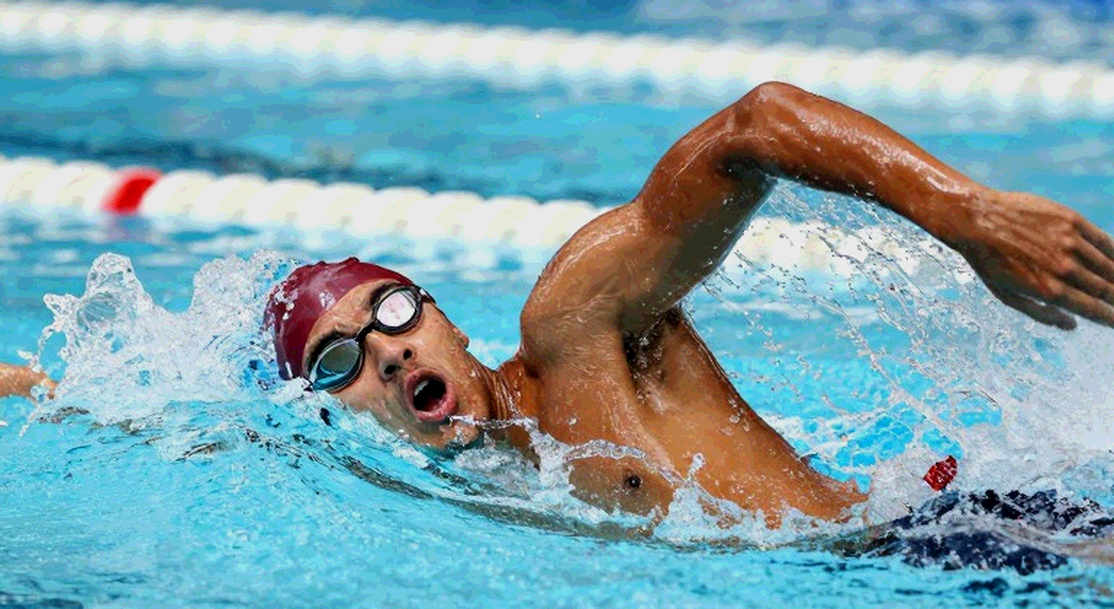
I don't read record boards. I read the running lines in people's eyes. And in Carly's eyes at that moment, I saw not only the pain of a wife who lost her husband, but also the bewilderment of someone who once believed her husband was too strong a swimmer to ever be in danger in the sea. Spencer Korwin, 38, once represented the United States at the 2026 ITU Age-Group Triathlon World Championships in Auckland, New Zealand. His 750-meter swim split was 13 minutes 27 seconds – the 32nd fastest in the field. Not Olympic class, but for an age-group amateur, that number was enough to confirm he was far from weak in the water.
Yet that very competence became the ticket that brought him closer to death. It sounds counterintuitive, but it is a phenomenon documented for decades in the open-water swimming community: strong swimmers account for a disproportionately high number of drowning victims. Not because they are incompetent, but because they trust their abilities to the point of underestimating the power of nature.
The incident occurred in the waters around Shelter Island, Long Island, where the Pridwin Hotel stands. An experienced master mariner in the area described the scene with a simple sentence that anyone who has swum in the sea understands: the currents are strong, especially at the narrow stretch where the tide rushes through. That morning, the weather was nothing out of the ordinary. The water surface was calm. No storms, no high winds, no warnings. That very gentleness was part of the deadly trap.
When water is forced through a narrow channel, the flow accelerates suddenly – the Venturi effect, a physical principle boaters understand well but is rarely mentioned in swimming lessons. A swimmer can easily handle a 2 km/h current in open water. But when the same volume of water is squeezed through a narrow gap, the speed can triple or quadruple. At that point, even an athlete with a 13:27 split for 750 meters cannot fight forever. Muscles tire, breathing shortens, and the cold morning water drains body heat faster than one imagines.
Carly described Spencer as a devoted father of two young daughters. He no longer competed at a high level as he did in his youth. In recent years, swimming was his personal ritual, a way to stay fit amid the grind of a family man's life. A morning swim during a family vacation – what could be more dangerous than drinking coffee? That is how most of us think, and that is why Spencer's death has shaken not only his family but the entire amateur triathlon community across America.
I remember the summer of 2026, when I flew to Kenya to write about Wanjiru, a girl who ran 800 meters alone on the dirt roads of Thika. She had no coach, no equipment, only a stopwatch and a notebook. Her story taught me that crisis only takes away the arena, not the trajectory. But Spencer's story teaches a different, colder lesson: sometimes an athlete's trajectory does not end at the finish line, but at a bend in the current they could not see.
In this context, police investigation is still ongoing, but local authorities believe this was an accident. There were no signs of abnormal health conditions in Korwin prior to the incident. His family launched a GoFundMe campaign with a goal of $500,000 to support Carly and the two daughters. At the time this article was published, donations had surpassed $361,000 – a figure demonstrating widespread sympathy and support from the community.
That number made me think. People usually raise funds for athletes who have suffered traffic accidents, or for cancer patients. But a healthy, strong swimmer who dies from going swimming? That creates a far deeper unease than deaths that can be explained. If Spencer could die like that, then any of us – those of us confident in our swimming abilities – could be at similar risk.
Water safety experts have identified a series of risk factors in this case: swimming alone, no one watching, no life jacket or tow float, no tide table check, and most importantly, swimming near a narrow channel where the current accelerates. None of these factors were Spencer's fault. But together they created a perfect storm, just as aviation accidents rarely stem from a single cause. This is what I call the blindness of the experienced – we often apply old knowledge to new environments without realizing that each environment has its own laws.
A 400-meter hurdler on a track can clear 10 hurdles with perfect technique. But place that same person in the middle of a dense forest, and they will stumble after three steps. Not because they are bad, but because they are applying skills from one environment to another. Pool swimming is different from sea swimming in the most fundamental way: pools have no currents, no waves, no cold water that numbs muscles. Spencer spent hours in pools and saltwater lagoons, but that did not prepare him for the force of the tide at the narrow channel where the Pridwin Hotel sits.
I am not here to judge nature or man. I only want to carve an image: a young father, two little daughters, and a wife who woke up in the morning and walked to the beach, watching her husband's silhouette disappear behind the waterline. No one in his family thought it would be the last time they saw him swim. And that is the most frightening thing about sports accidents – they never come with a warning.
In the days after the story spread, many articles expressed condolences for Spencer. But if we stop only at grief, we betray his legacy. Spencer was an athlete, and athletes never want to be remembered as victims. They want to be remembered as people who lived fully with passion, and more importantly, they want those left behind to learn from their journey.
The lesson from Spencer's death is not 'don't swim in the sea'. The lesson lies in how we approach risk in sports and in life. The more proficient we become in a skill, the more likely we are to underestimate the differences between contexts. The hurdler does not ask how high the hurdles are. Only asks where the finish line is. And a triathlete spent his life answering that question, only to have the tide of a small island off Long Island pose a different question he never had the chance to answer.
Korwin's family and friends have found a small comfort in the fundraising efforts, a way to turn grief into concrete action. Carly said she would use the money to secure the future of her two daughters and to establish a sports scholarship fund in her husband's name. That is perhaps the rightest way to honor a man who gave his heart to sports – not through tears, but by helping other athletes pursue their passion more safely.
As I write these lines, the sun is rising over Shanghai Bay, and I think of the millions of people about to step into the water at pools, lakes, and beaches around the world. They do not know Spencer Korwin's name. But if his story can make a few of them pause for a beat, check the current, learn the tide table, or simply ask a friend to swim with them – then his death has planted a seed. And in the world of sports, that seed is the only way we turn loss into hope.
The flame of 2026 was rekindled by an unnoticed Kenyan girl. Spencer Korwin's flame will be rekindled by his two little daughters – two children growing up with the story of a father who swam so well that he thought the ocean could never take his life. But the ocean never promises anything to anyone. It just stays there, waiting. And good swimmers, precisely because they understand the water's beauty so deeply, are sometimes the last to recognize its power.


Cầu thủ liên quan